
Best Sunscreen Types Explained: Best Creams, Sticks, Sprays & More for Every Need
This guide discards a one-size-fits-all strategy and subdivides sunscreen options according to real-life needs– your skin type, your daily routine and the way you want to apply your products. Knowing the formula that goes on the sensitive or the oil skin, and the formula you prefer in a stick or a spray to put on when you are in a hurry, you will have a clear-cut and practical summary of what you can best wear.
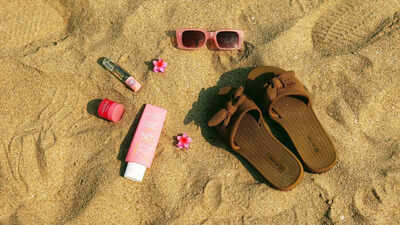
Sunscreen is not something to pack only on beach days, but to use on a daily basis to keep your skin healthy and shielded. Daily application will also protect against adverse UV rays that leave your skin burnt, aged, pigmented, and potentially damaged in the long run, such as skin cancer. You may be taking a walk outside in the cold sunlight or sitting inside somewhere by a window, but the exposure to UVA and UVB still occurs, and so, having sunscreen is something that everybody must not ignore in any skincare regimen.However, selecting the appropriate sunscreen can be confusing. Enter any store or visit the internet and you will come across a variety of formats- creams, gels, lotions, sprays, sticks and even powders. The various types provide different advantages, textures, and finishes, and it is at times rather difficult to know what you want to put on your skin. A rich cream might be well suited to the dry skin, but when it is oily, the cream might turn out to be excessive, and some light-weight gel might fail to keep the person with the dry complexion hydrated. Now that we have this information, we will find it much easier to select a sunscreen that will actually be effective with your skin and your life.
Broad Spectrum (UVA+UVB Protection)
Chemical Sunscreens:
All those people who are dry or sensitive, and want to use cream sunscreens, because of the rich and nourishing formula. Their strong hydrating properties are not only this, but they also provide a protective layer against harmful UV rays. The texture is rich, and that is why it prevents traces of dryness and makes the skin soft during the whole day. Such sunscreens will be most convenient in winter or in a dry climate, when the skin in the air dries almost as easily. However, when in a hot and humid environment, the skin can feel heavy or greasy. Regardless, they are considered to have good and even coverage, which makes them a good choice of everyday sunscreen that requires additional hydration.The gel sunscreens are very suitable for application on acne and oily skin due to their light texture,d non-greasy skin feel. They are quickly absorbed into the skin, providing a matte or semi-matte finish that works in excess oil and shine. This causes them to be a perfect selection during hot and humid weather, especially in the tropics. Gel formulas also do not easily clog the pores, minimising chances of breakouts. They lack hydration and hence do not suit the dry type of skin, except when they are used with a moisturiser. All in all, these are best to wear every day and feel fresh and airy. Lotion sunscreens have medium-level consistency that is neither too thick nor too lightweight, and can be applied not only to the face, but also to the body. They can be used on all types of skin, though in most cases on a daily basis. They can be easily spread and covered in case of sun protection due to their smooth texture. They are typically applied in the family and mostly in lotion sunscreens as they are convenient and easy to use. Like most sunscreens, they must be reapplied after several hours to take effect. They strike a good balance between being light and hydrating, thus their use as a backup. Whether in solid form or in a glide-on application, stick sunscreens are very convenient and can be used anywhere, even when one is travelling. They apply best to specific regions, like on the face, lips, nose and around the eyes. These are the perfect touch-ups to apply quickly and mess-free without the need to use your hands, as their compact design enables them to apply on the spot. Especially handy is using them to apply sunscreen all day long. Nevertheless, they do not cover as much as creams or lotions do; hence, several swipes are required in order to get adequate coverage. Although they may not meet ideal use in the entire body, they are perfect in precision and the high level of mobility in day-to-day activities. Spray sunscreens are easy to apply, and they are usually applied to the larger parts of the body. They are in an ultra-light mist format so as to be easily applicable on the go or re-applied with minimal effort. Their popularity, especially in outdoor activities, on beach days, and in sports, is attributed to their speed and convenience. One of the significant shortcomings, however,r is that it may lead to uneven application since it may be difficult to level the amount of product applied. The spray can also be inhaled, as there is a risk of it not being used carelessly. It is necessary that it is applied and rubbed in to be effective. Powder sunscreens, like other forms, are primarily intended to be applied again, particularly over makeup. They are also dry and have a matte finish that prevents excess oil, and thus are perfect for individuals with greasy skin. These sunscreens are typically in compact or brush sizes, and they are easily touch-upped without leaving a messy look during the day. They are ideal in keeping you sun-protected, without interfering with your make-up. Powder sunscreens, however, are not suggested to be your main sunscreen, and they might not be able to fully cover you. Rather, they are best used as an added protective coating on top of the cream or gel to provide convenience and added protection. The sunscreen in everyday office work should be light and comfortable, besides being invisible to the skin. Gel or lotion-type sunscreen is better as it is readily absorbed and it does not have a sticky or oily feel. The non-sticky formula will ensure you are kept fresh throughout the day, but on the inside, and a no white cast finish will build a smooth layer that will not be revealed under your makeup. Wide-spectrum defence is, however, significant as there is the risk that the office is in proximity to a screen and that the sun can often penetrate the windows. Choose a sunscreen that mixes with your skincare and make-up level so that it can be simple to apply each morning without disrupting your schedule and causing the sunscreen to feel bulky. Sports activities or other outdoor activities require sunscreen to be long-lasting. Creams or sprays, which build resistance to light water and sweat, are best because they can be used in wet conditions. There are sweat-proof formulas that are helpful to have all day because they do not require reapplication due to the extreme form of physical activity. Creams are excellent on extensive areas of the body, whereas sprays can be applied very fast. To allow further protection, it should be reapplied after sweating a lot or towel drying. The high SPF and wide-spectrum formulations are to protect against extended sun exposure (particularly in the high sunlight periods) and hence make them the right formula to use by sportsmen and outdoor players. Convenience is important when you are on the move or when you have to move a lot. Stick sunscreens and pocket convenient sprays are ideal to apply in a rush, without making a mess. Stick formats are particularly practical when it comes to specific body parts, such as the face, nose, and lips, and they can be used anywhere with accuracy, any time. Small sprays allow covering the damaged area in a simple manner and during a small amount of time without possessing huge bottles. These formats are not heavy and can be packed in bags or pockets, and can be easily reused in case of a hectic schedule. They are ideal in protecting yourself against the sun throughout the day, at times when you just cannot find a moment to do a full skin regimen. Days at the beach and vacations require more effective and stronger sun protection because of the extended sunlight exposure. High SPF cream and spray sunscreen is the best combination; a cream to enable wide area coverage and a spray to facilitate easy application. Formulas that are resistant to water are necessary because chances are that you will be swimming or sweating. To be effective, it should be applied frequently, at least every couple of hours, particularly immediately after exiting the water. Use sunscreens that protect against sunburn and tan that protect against UVA and UVB. The timetable will imply that your skin will never be exposed, and you will enjoy spending time outdoors without worrying about it. Concerns about the nature of sunscreen to be applied to children and babies override all other considerations related to the type of sunscreen used on them. Rather, you should use mineral sunscreens, which include elements like zinc oxide or titanium dioxide, since, when spread on the skin, they rest on the skin and repel UV rays with no adverse effects. They can be used on delicate skin. Lotions or creams are better to use since the inhalation risks are less than those of sprays. Find fragrance-free and dermatologically tested formulas to avoid allergies or reactions. The combination of easy-to-apply textures can assist the parents to cover the skin in a fast manner, and evenly, which makes daily sun protection easy, effective and stress-free to both the kids and the caregivers.
Post Sweating or Swimming
Pro Tip
Other Related Articles You Might Like To ReadAffordable Alternatives to Dyson Airwrap You Can Buy in IndiaSummer Makeup Essentials for Oily Skin: Here is What Your Skin Needs
Sunscreen Basics
SPF Explained (SPF 30 vs 50)
- The Sun Protection Factor (SPF) is a number that indicates the protection from the UVB (rays that cause sunburn) rays.
- It contains a protection factor of approximately 97 per cent and an SPF of 30 and 98 per cent and SPF of 50 respectively.
- The difference might not be much, but SPF 50 has a slightly higher level of protection in case of a lengthy outdoor activity.
- Does not imply all-day protection, so it is important to reapply after every 2-3 hours.
- The use of SPF 30-50 on a daily basis should depend on an individual, but SPF 50+ is used on a sporting day or at the beach.
Broad Spectrum (UVA+UVB Protection)
- Always select sunscreens with such labels as broad spectrum.
- UVA rays are deeper and result in ageing, wrinkles and pigmentation.
- UVB radiation is experienced at the surface, causing sunburns and skin damage.
- A combination of these two offers 100 per cent protection by use of a broad-spectrum sunscreen.
- Without this label, you can only be shielded against sunburn, but not permanent damage.
Water & Sweat Resistance
- Necessary when you are outside, exercising or in hot weather.
- Sunscreens are water-resistant (40 or 80 minutes).
- It is protection at the time of sweating or exposure to light water (at that time).
- Even when the product is waterproof, it is recommended that it be applied immediately after swimming/vigorous sweating.
- Quite appropriate in sports, pleasant on the beach, and in Indian summers.
Chemical vs Mineral Sunscreens
- Absorb UV rays and change them to heat.
- Light finish (Invisible) No white cast.
- Ideal every day and without make-up.
Mineral (Physical) Sunscreens:
- Remain on the top of the skin and reflect UV rays.
- Should have zinc oxide or titanium dioxide.
- Soft with sensitive skin and children.
- May place a small white stain, but leaves immediate protection.
Sunscreen Types Explained
Cream Sunscreens
- Best for: Dry & sensitive skin
- Texture: Rich, moisturising
- Advantages: Intense hydration, good barrier protection
- Cons: Tends to get boggy during humid conditions
Gel Sunscreens
- Best for: Oily & acne-prone skin
- Texture: Lightweight, non-greasy
- Pros: Quick absorption, matte finish
- Cons: Not hydrating enough for dry skin
Lotion Sunscreens
- Most suitable: Everyday use (face+body)
- Control: Excellent (not excessively thick or runny)
- Advantages: Simple to use, multifunctional.
- Cons: Needs frequent reapplication
Stick Sunscreens
- Best for: Face, lips, under-eyes, travel
- Texture: Solid, glide-on
- Pros: Mess-free, precise
- Cons: Limited coverage, needs layering
Spray Sunscreens
- Best for: Body & quick reapplication
- Texture: Ultra-light mist
- Pros: Fast, convenient
- Cons: Risk of uneven coverage
Powder Sunscreens
- Best for: Reapplication over makeup
- Texture: Dry, matte finish
- Pros: Oil control, easy touch-ups
- Cons: Not ideal as a primary sunscreen
Sunscreen By Lifestyle
Daily Office Use
Outdoor/Sports
Travel & On-the-Go
Beach/Vacation
Best Sunscreen for Kids & Babies
Application Guide
How Much to Apply - Face (2-Finger Rule)
- Squeeze sunscreen in the direction of your index and middle fingers.
- This is to guarantee sufficient product to cover the entire face and neck.
- Less usage is much less effective.
How Much to Apply – Body (Shot Glass Amount)
- Apply with an approximation of 30 ml (use in a shot glass) to the full body.
- Dispersed evenly on all exposed surfaces.
- Also not to be overlooked are such common places as ears, feet and the back of the neck.
When to Apply
- Use sunscreen 15-20 minutes prior to going out.
- This helps in the proper absorption and activation of the skin.
- Use it as the last step of your skincare (prior to makeup)
Reapplication Rule
- Apply regularly after every 2-3 hours to remain protected.
- Sunscreen is lost through sweat, oil and exposure to the environment.
Post Sweating or Swimming
- Apply right after sweating intensively, swimming or towel drying.
- Waterproof sunscreens even become ineffective with time.
Pro Tip
- Do not rub too hard when applying, but simply smear so as to have an even covering.
Skin Type & Recommended Sunscreen

About the AuthorDimple Sharma
End of Article

quick links
Best Split ACBest i5 LaptopsSide By Side Door RefrigeratorsTouch Screen Laptops750 Watt Mixer Grinder32 Inch Smart TV500GB hard diskTablets under 12000Hydraulic Storage BedsRunning machinesBeard Trimmer for MenJeggings for womenCo-ord sets for womenHybrid Smartwatches for menBest Smartwatch Under 1500Over-ear headphones13 inch laptopsPortable hotspot devicesHarmonium for beginnersBass guitarsBest Gaming HeadphonesBest VR HeadsetsCar UmbrellasBest Stretch Mark Creams and OilsGirls’ bicyclesWicket keeper glovesHardsided trolley bagsBackpack for womenBackpack for menWeight loss teaOrganic turmeric powderBest Kitchen chimney in IndiaLCD writing tablet2TB Hard DiskWireless earphones under 1000Bluetooth earbudsAir Conditioner9kg Washing Machines65 Inch TVVacuum CleanersBest Water PurifiersBest AC In IndiaAutomatic Washing MachineBest AC Under 20000
Copyright © 2026 Bennett, Coleman & Co. Ltd. All rights reserved. For reprint rights: Times Syndication Service