
- Home
- Electronics
- Fix Your Audio Instantly: Best Clip-On Microphones for Creators
Fix Your Audio Instantly: Best Clip-On Microphones for Creators
Every creator remembers the first time when they shot something that looked brilliant but sounded terrible with all the background noise, hollow voices, and the strange echo that mixes everything and makes it feel amateur. In India, especially, creators often work in unpredictable environments, but they are smart enough to invest in a good quality clip-on microphone that becomes the backbone of modern content creation. Here are some of the best ones you can get for your format and produce the best content in 2026.
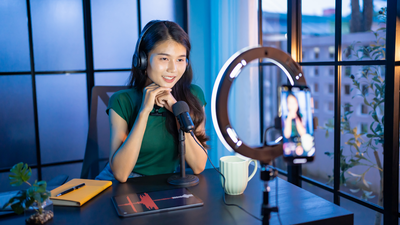
In case you want to enhance your vlogging, the microphone for vlogging, reel making, filmmaking, then improvising on audio is among the best investments to make. Most of the use smartphones and cameras to produce videos that look good, but many of them still have low-quality audio, and poor audio is one thing that the audience will not stand. Hence, a mic is a must! Even with iphone 17 Pro Max, your audio will be compromised, and you will not experience a professional level of sound in your video. In this article, we have pulled together the best buys, which include good-quality clip-on mics. If you are not clear about the distinctions or features, or what will suit your content type, there is no need to be concerned. We have added all the information at the end, where all the key points about microphones will be explained. Moreover, we have made it a point to offer a lot of budget options, and you could be astonished at how little money you might need to buy a great mic.Clip-on microphones are the wireless boon for creators, as they are smart, wireless, noise-cancelling tools that are built for creators who juggle formats, platforms and shooting styles. Continue reading to discover which mics have made it to our final list. And look at some of the best clip-on microphones through a creator’s lens first. At their core, the problem that clip-on microphones try to solve is a physical one. The farther the sound source, the less clear it becomes. The microphone which is placed the farthest from the mouth receives the most room reflections, ambient noise, and phase problems in the signal.Micropohones reduce the distance between the source and the mic, thus increasing the direct-to-reflected sound ratio. In return, you will get clearer vocals, better intelligibility, and less dependency on acoustics. Most of the clip-on microphones are based on the use of omnidirectional capsules. Omnidirectional mics are capable of picking up sound from all directions equally well, making the microphone less affected by the user's head movements. However, it is a disadvantage too because they simultaneously collect more surrounding sounds, which is thus the reason that placement and noise handling are so important.Before reels and shorts, the audience was very forgiving; they used to enjoy the content for the sake of entertainment, but today, the short-form content is consumed often and on a very regular basis. So there is a lot of competition in terms of quality. This paradox means that you must be both clean and assertive.Creators often underestimate how much processing platforms apply. Poor audio gets compressed aggressively, exaggerating noise and distortion. Good audio survives compression gracefully. This is why clip-on microphones feel more important than ever.Long-form content carries different expectations. Like the formats of podcasts and interviews require listener comfort, thus if the content is produced on harsh frequencies, rather than causing solace, it will cause fatigue. Clip-on microphones, it will help maintain vocal consistency across long recordings.In podcasting studios, the very essence is being consistent. The quality of the sound is so high that after a certain time, listeners will get tired and hear the distortion. An excellent podcasting wearable microphone must have the ability of producing an intimate, stable, and forgiving sound even in a long recording session. It should have the capability of connecting in a hassle-free manner to the audio interfaces.In India, most podcasters have their home studio as a place to record, and not many of them have the option of getting it professionally treated acoustically. A good-quality clip-on mic can help in this by capturing the speaker's voice and so reducing the sound reflections that come from the room. Thus, it speeds up the editing process and also decreases the amount of noise processing that is done.Recommended Product:Documentary and filmmaking audio faces unpredictable environments. Traffic, wind, crowds, and movement all test microphone performance. Clip-on mics here must balance discretion, durability, and sound quality. Filmmakers need audio that survives real-world chaos while staying invisible on camera.Recommended Product:Vlogging is a kind of activity that is very close to both storytelling and being spontaneous. The creators must be able to move freely but also, at the same time, maintain the consistency of the sound. Wind noise, different distances, and fast setups are all the time problems that are being faced.Recommended Product:Short-form content demands fast turnaround. Audio must sound clean without heavy editing. Creators often shoot multiple clips quickly, so setup time matters.Recommended Product:The final verdict of the entire article is that if the content is great, the audio should be great too. Clip-on microphones are the link between creativity and practicality. When they are picked wisely, they integrate with your process and allow your voice to be the one in front. The best microphone is not the one with the highest price tag. It is the one that honours your creative process.Other Related Stories:Must-Have Accessories To Start Content Creation in 2026GoPro vs Alternatives: Best Action Cameras Compared
Understanding Clip-On Microphones at a Deeper Level
Why Audio Expectations Changed After Short-Form Content
How to Choose the Best Clip-On Microphone
- Buying a clip-on microphone choice is not just about the famous brands but also about the personal workflow of each user. The primary aspect to consider is the format. All forms of audio content, from podcasting, filmmaking, vlogging, and short-form audiobooks, have different aspects of audio quality as their main feature.
- Then comes the type of connection. Wired ones still give the best sound quality for the price. They go directly to the camera, the recorder, or the audio interface and rarely get disrupted. Wireless mics give the movement advantage and the convenience of being able to move around, but depending on the transmission, battery life, and codec quality. For filmmakers working solo, a wireless mic often becomes the only option due to time-saving. For places where the environment is controlled, wired will still be the winner regarding sound quality.
- The polar pattern significance cannot be overemphasised. Omnidirectional lavs take in the sound equally and can be placed anywhere, which is why they are used most often. Directional lavs, however, take less background noise and want exact positioning. If you have professionally shot outside or in a noisy room, this decision will determine how much editing you do afterwards.
- Moreover, consider the ecosystem. Will the microphone be usable with the phone, camera, and laptop? Does it require an adapter? Will you be able to scale it up later? The best clip-on microphone is the one that the current setup doesn’t feel like friction and still grows with you.
Best Studio Podcast Clip-On Microphones
The Boya M1 Pro is an ideal choice for podcasting since its primary function is to provide excellent vocal clarity. In other words, wired microphones do not have any wireless interference problems, which are mainly associated with the cordless mics; this particular aspect becomes quite relevant for lengthy recordings. The omnidirectional pickup system has the upside of taking the voice evenly, therefore, reducing the issue of volume fluctuations when the hosts are moving their mouths as they talk.Why It Works for PodcastingThe Boya M1 Pro is a perfect match for podcasting because its main application is vocal clarity. Wired mics, to put it differently, are totally free of the wireless interference problem; this feature is especially important for long recording sessions where there is a possibility of intermittent dropouts that might spoil the take. The omnidirectional pickup has the advantage of capturing the voice uniformly, thus minimising the problem of volume shifts when the hosts move their mouths naturally while they are talking.For the studio-like podcast, the M1 Pro microphone is a perfect match for the budget audio interfaces and the DSLR camera setups. It is capable of handling the dynamics of the spoken word very well. This makes the listener less tired during the long episodes. The wide frequency response makes the voices sound natural rather than processed.Pros: Strong compatibility, dependable signal quality, and minimal setup time.Cons: The long cable, which can feel cluttered without proper management.
Clip-On Microphones for Filmmaking and Documentary
The Rode Wireless ME is a compact wireless clip-on microphone system built for creators who want fast, dependable audio without technical friction. The Wireless ME uses Rode’s Series IV 2.4GHz digital transmission, which guarantees stable sound even in crowded places. Apart from this, the transmitter has an integrated omnidirectional microphone, which gets rid of the need for individual lavs and thus keeps the setup very simple. Besides, its featherweight factor does not draw attention when on camera, but the USB-C and camera connections facilitate easy switching between devices like phones, mirrorless cameras, and laptops without the use of adapters.Why It Works for FilmmakingIts capsule captures natural voice tones without exaggeration, which is essential when dialogue needs to blend into cinematic soundscapes. The mic handles dynamic range well, preserving quiet speech without clipping louder moments. Durability is a major strength. Documentary shoots involve repeated setup, movement, and environmental stress. The reinforced cable and strong clip reduce failure risk. When paired with wireless transmitters, the mic maintains clarity over distance.Pros: Excellent vocal realism, strong build quality, and professional compatibility.Cons: Include a higher cost and the need for proper audio gear to unlock its full potential.
Clip-On Microphones for Vlogging
The DJI Mic Mini is specifically designed to provide creators with the option of gaining access to the reliable and famous DJI audio in a more compact and accessible manner. It has a reliable digital transmission, an excellent voice receiver, and a tiny transmitter that is still invisible on the camera. It can easily be connected without any difficulties to both smartphones and cameras. It is a perfect model for vlogs, travel shoots, and handheld filming. Even though the size is very small, the Mic Mini provides a clean and balanced sound with good control, thereby helping the creators to have the same level of audio quality while being very quick.Why It Works for VloggingThe DJI Mic is built for movement. Wireless freedom removes cable distractions, while internal recording protects against signal loss. This matters when filming outdoors or in busy locations.Audio quality remains clear and present even during motion. Built-in safety tracks help prevent clipping. Battery life supports long shoots without interruption.Pros: Include flexibility, reliability, and quick setup.Cons: Higher price and the need to manage batteries.
Clip-On Microphones for Short-Form Content and Reels
The Hollyland Lark M2 Wireless Microphone is a small and extremely light microphone system that can be attached to the clothing of the person who wears it. It is perfect for short-form creators who want audio without stress from the setup. The microphone has received widespread acclaim for its sound quality. It comes with features like stable wireless transmission, vocal tuning for clarity, and a transmitter that exists discreetly and can be camouflaged with outfits. The microphone can be easily paired with smartphones and cameras, thus making it suitable for reels, shorts, and fast talking-head videos. It is very lightweight, which is also comfortable over long periods of shooting, and has an audio output that is crisp and balanced for social platforms. Why It Works for Short-FormThis mic prioritises speed over complexity. Audio of the highest quality is adjusted not for the depth of the studio but for the clarity of the voice, which matches the requirements of the social platforms. The assembling time is just a couple of seconds, thereby making it right for the impromptu thoughts.Pros: Affordability, simplicity, and portability.Cons: Include limited manual control and moderate noise handling.
Here are some other options:
The UTECTION is a wireless microphone that can be clipped on and operates at a 2.4 GHz wireless frequency. It comes with adapters for both USB-C and Lightning devices, making it ready for use with Android devices, iPhones, and iPads in no time. Among its features is also the noise cancellation and echo management that help in reducing background noise significantly, thus keeping the sound of the words clear even during outdoor shooting in the most crowded places. The battery life of the microphone is very long and lasts for approximately 48 hours of standby time, which is why you will never run out of power when shooting. The 9-gram small transmitter is not only easy to clip on but also easy to forget, allowing you to concentrate on your performance and not on the wires and settings.
The Hollyland Lark A1 Duo, as its name suggests, is a dual-transmitter wireless mic system that acts like a creator’s assistant. It works with phones and tablets and provides good 48 kHz/24-bit audio quality and three levels of noise cancellation that can get rid of wind and noise from the room. Besides the tiny transmitters and a USB-C receiver, you also have a charging case, which makes the process of recording interviews and dialogues more convenient. The magnets on the transmitters allow them to attach firmly to the clothes, offering an easy and secret placement. With a generous 200m line-of-sight range and app-based gain and EQ control, it is made for creators expecting flexibility and audio quality to come in one package.
The Digitek DWM 101 is a very cheap wireless microphone system with ANC that catches voices clearly and is suitable for the use of beginners. This clip-on microphone easily mounts to cameras and phones, has a good wireless range, and is an excellent choice for people who are not very skilled and very flexible in tallying and operating equipment. The device has a 360-degree audio capture and is powered for several hours on a single charge, this suggest that for long sessions of interview and long-formats without frequent power interruptions. Also, if you have something in mind that feels simple and economical microphone that you can easily install and use for your vlogs, interviews, and short-format shooting, this mic is definitely worth adding to your cart.
For only a few bucks, the GRENARO J13 wireless lapel mic is an excellent choice for creators who are just starting to experiment with wireless audio. Besides, it also includes a charging case and dual transmitters so that two people can be miced at the same time, a very nice feature for interviews or co-hosted videos. The system has a DSP noise reduction chip with three noise filtering levels to ensure that the voices are still understandable. The configuration is so easy that you plug the receiver into your phone or device, and it gets paired automatically. The battery life can be considered quite good for this price bracket. If you are in need of an uncomplicated wireless audio solution that is also user-friendly and affordable, then this can be a good beginner's pick for Indian content creators.
Conclusion

About the AuthorAshna Ali
End of Article
quick links
Best Split ACBest i5 LaptopsSide By Side Door RefrigeratorsTouch Screen Laptops750 Watt Mixer Grinder32 Inch Smart TV500GB hard diskTablets under 12000Hydraulic Storage BedsRunning machinesBeard Trimmer for MenJeggings for womenCo-ord sets for womenHybrid Smartwatches for menBest Smartwatch Under 1500Over-ear headphones13 inch laptopsPortable hotspot devicesHarmonium for beginnersBass guitarsBest Gaming HeadphonesBest VR HeadsetsCar UmbrellasBest Stretch Mark Creams and OilsGirls’ bicyclesWicket keeper glovesHardsided trolley bagsBackpack for womenBackpack for menWeight loss teaOrganic turmeric powderBest Kitchen chimney in IndiaLCD writing tablet2TB Hard DiskWireless earphones under 1000Bluetooth earbudsAir Conditioner9kg Washing Machines65 Inch TVVacuum CleanersBest Water PurifiersBest AC In IndiaAutomatic Washing MachineBest AC Under 20000
Copyright © 2026 Bennett, Coleman & Co. Ltd. All rights reserved. For reprint rights: Times Syndication Service