
- Home
- Kitchen & Dining
- Pressure Cooker vs Electric Pressure Cooker: Which Is Better?
Pressure Cooker vs Electric Pressure Cooker: Which Is Better?
A pressure cooker is essential in cooking in Indian kitchens. However, in recent years, modern homes have been gradually being overtaken by electric pressure cookers. Although they both promise to cook faster, they experience quite a difference in their day-to-day lives. This article dissects the actual differences and some popular products from Amazon, which will fit in your cooking space.
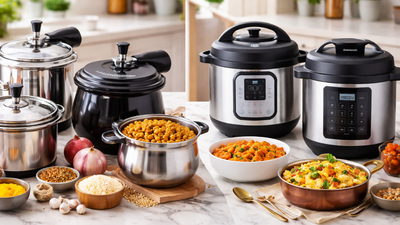
To tell the truth, the majority of us have been used to that whistle sound in the kitchen. The classic pressure cooker has been a part of Indian homes for decades. It is trustworthy and fast, and nowadays, it's like a part of a family. However, this time things are different. Every kitchen is becoming smart, lifestyles are becoming more hectic, and suddenly, electric pressure cookers are ubiquitous.On the face of it, the two are the same job. Cook food quickly using pressure. However, once you go and use them, the experience is totally different. One of you requires your attention; the other nearly operates on autopilot. One needs your attention; the other almost works on autopilot. One feels rooted in tradition; the other feels like the future.Both are excellent ways of cooking food, but both are very different in terms of budget and ease of lifestyle. But before making any decision, make sure you read this article to understand the difference between a pressure cooker and an electric cooker, and also see what an array of options is available on Amazon for you to make an informed decision. A conventional stovetop pressure cooker is basic, powerful and does the job without any noise. You put it on the gas, and wait till you hear the whistles and your food is done. It lets you have complete control over heat and cooking time, which most expert cooks like. It operates even when power is off, a major issue in most houses. Nonetheless, it should be addressed. You can not leave it and walk away. This remains one of the most convenient and less expensive kitchen utensils that you can possess in case of daily use of dal, rice and sabzi.Some popular options to consider!Electric pressure cookers are all convenient. All you do is place your ingredients, press a button and forget it. They have pre-programmed options of various dishes, and that is excellent when one is not very confident about cooking. Numerous models are rice cookers and slow cookers. The greatest benefit is the stress-free aspect of the process. But they require electricity, and they are larger. To the busy or novice, this is an intelligent and current addition.Best-seller on Amazon!Other Related Stories:Cold Press Juicer vs Regular Juicer: Everything You Need to Know + Best Picks A Complete Buying Guide to Induction Cookware under 5000 for Modern Kitchens
Pressure Cooker
This Prestige cooker is designed to cook on a daily Indian basis, but with a little smarter approach. It has a deep lid which manages the spillage, hence your stovetop is cleaner after cooking. Tri-ply stainless steel body assists in the even distribution of heat, so dals and curries are cooked well without being burnt at the bottom. It is induction- and gas-compatible as well, and is flexible for the modern kitchen. The dimensions are good enough to accommodate small families, and the material is robust and durable. It is a good combination of hygiene, durability, and everyday comfort in general.
The most notable feature of the Hawkins Contura is the fact that the body of the product is curved, and it is, in fact, easier to stir and no food sticks in corners. It is produced using hard anodised aluminium that is stronger than ordinary aluminium, and it does not stain or corrode with time. The cooker is evenly heated, which is convenient when it comes to cooking such dishes as rajma or chole, which require appropriate cooking. It is also fitted with a secure lock-top design, enhancing safety. When you cook frequently and desire something slightly high-quality that will not wear out quickly, this one will seem like the most reliable option.
This Butterfly cooker is created to suit larger families or bulk cooking. The 5.5-litre size is ideal for preparing meals such as biryani or lentils, or preparing multiple meals over days. It is typically lightweight with an aluminium body, therefore boiling quicker and being easy to carry around. The curved feature provides a little more access when cooking, particularly with thicker dishes. It might not be as high-quality as stainless steel alternatives, but it works effectively. This is a convenient and cost-effective choice to do day-to-day heavy cooking without breaking the bank.
Electric Cooker
The Instant Pot Duo is probably the most talked-about electric cooker for a reason. It does almost everything. Pressure cooking, slow cooking, steaming, sautéing, and even making yoghurt. The 5.7-litre size is perfect for families. What people love most is how consistent it is. You get the same results every time without guessing. The controls are simple, and once you get used to them, cooking feels almost effortless. It is especially useful for busy weekdays when you don’t want to stand in the kitchen. It’s not just a cooker; it feels like a full cooking system.
This one feels like a strong competitor to the Instant Pot. It comes with a sleek stainless steel design and multiple cooking modes. The interface is modern and quite easy to understand. What stands out is its faster cooking technology, which saves a bit more time compared to many others. It also has safety features that make it beginner-friendly. The build quality feels solid, and it handles Indian cooking really well, from dals to curries. If you want something slightly more updated and stylish, this is definitely worth considering for a smart kitchen setup.
The Apparent Difference
- On a basic level, the two cookers work on the principle of pressure to cook food more quickly. However, everything is different when it comes to the experience.
- A conventional pressure cooker is palpable. If you manage the stove, watch the whistles and make changes as you have time. It is more instinctive cooking, which many Indian families are already accustomed to. An electric pressure cooker, on the other hand, is somewhat like using a gadget. You select a mode, set the timer and then leave it to do its thing. It even turns off or maintains food warm automatically.
- Next is the safety factor. Electric cookers are also provided with various layers of safety; therefore, they are not as scary to those who have not mastered the cookers. The old-fashioned cookers are not risky either, although they relied more on proper use.
- Dependency and space are important factors, too. Electric cookers require counter space and electricity, whereas a stovetop can be used anywhere with a gas stove.
- Simply put, one is manual and Indian habit-driven, and the other is futuristic and convenience-driven. There is no wrong or right one; they only fit different types of users.
How to Figure Out Which is Better?
- The answer is, it all depends on how you live your life. If you love to cook, know how to regulate the heat, and you are not afraid to be in the kitchen, then a traditional pressure cooker will be more comfortable. It is fast, cheap and does not use electricity. It also allows you the latitude to experiment.
- However, when your schedule is hectic and unpredictable, an electric pressure cooker can truly simplify matters. You can add it all in, touch a button, and continue with your day. It saves mental strain, particularly with people living a bachelor's life or who don't know the techniques of cooking.
- Another factor is the budget. Electric cookers are an investment, whereas traditional cookers are much cheaper. However, they also substitute several appliances, which may even out.
- Do you have space in your kitchen, as well? Electric cookers must have a permanent location, and that is near the switchboard, whereas the stovetop can be tucked away.
- In the end, there is no one-size-fits-all answer. When convenience and automation are important, then go electric. In case simplicity and control are important, use the classic. Both will cook your food properly; it is just up to your taste in cooking.

About the AuthorAshna Ali
End of Article

quick links
Best Split ACBest i5 LaptopsSide By Side Door RefrigeratorsTouch Screen Laptops750 Watt Mixer Grinder32 Inch Smart TV500GB hard diskTablets under 12000Hydraulic Storage BedsRunning machinesBeard Trimmer for MenJeggings for womenCo-ord sets for womenHybrid Smartwatches for menBest Smartwatch Under 1500Over-ear headphones13 inch laptopsPortable hotspot devicesHarmonium for beginnersBass guitarsBest Gaming HeadphonesBest VR HeadsetsCar UmbrellasBest Stretch Mark Creams and OilsGirls’ bicyclesWicket keeper glovesHardsided trolley bagsBackpack for womenBackpack for menWeight loss teaOrganic turmeric powderBest Kitchen chimney in IndiaLCD writing tablet2TB Hard DiskWireless earphones under 1000Bluetooth earbudsAir Conditioner9kg Washing Machines65 Inch TVVacuum CleanersBest Water PurifiersBest AC In IndiaAutomatic Washing MachineBest AC Under 20000
Copyright © 2026 Bennett, Coleman & Co. Ltd. All rights reserved. For reprint rights: Times Syndication Service