
- Home
- Home decor & Garden
- uPVC vs Aluminium Windows: Which Is Better for Indian Homes (2026)
uPVC vs Aluminium Windows: Which Is Better for Indian Homes (2026)
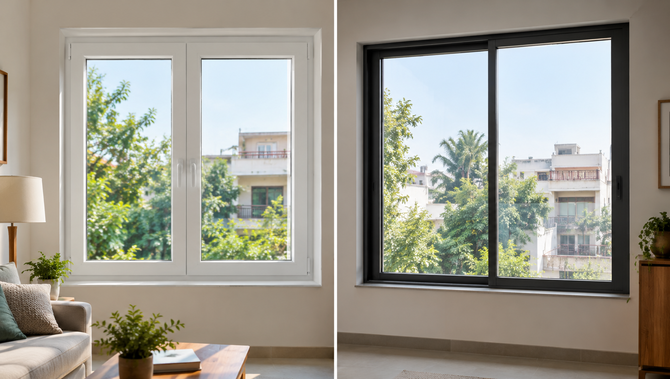
Every Indian homeowner who replaces a window ends up at the same fork in the road: uPVC or aluminium. The uPVC vs aluminium windows debate looks simple on a showroom floor, where both frames shine, and both come with a warranty card. It looks very different in May, when a west-facing room turns into an oven, or in July, when a sill starts to leak. Frame material decides how much heat crosses into the room, how much rain and street noise gets in, and how many weekends go into upkeep. This guide to uPVC vs aluminium windows India buyers face in 2026 compares both materials on insulation, sound, monsoon resistance, maintenance, durability, cost and looks. It explains where aluminium genuinely wins, what separates a good uPVC profile from a weak one, and how to match the material to your city, budget and building. Use it as a checklist before you shortlist a single brand.What Is the
The short answer: uPVC is a rigid plastic, aluminium is a metal, and almost every performance gap follows from that.uPVC insulates better than standard aluminium, which makes it the stronger answer to the uPVC or aluminium for Indian climate question. Its thermal conductivity is roughly 0.16–0.20 W/mK, against more than 200 W/mK for aluminium. An ordinary aluminium frame can carry outdoor heat into the room, while uPVC’s low conductivity and air chambers resist it.Glass is the bigger lever, so double glazing matters most. But the frame decides how much heat leaks around the edges, and in cities where air conditioners run for much of the year, such as Delhi, Hyderabad, Chennai and Ahmedabad, those edges add up. Thermally broken aluminium narrows the gap considerably, though at a higher price.uPVC windows generally block more street noise. They are commonly rated for sound reduction of about 30 dB depending on the glazing, and multi-chamber profiles with compression gaskets seal the small gaps through which most noise enters. Aluminium can match this with quality seals and laminated or double-glazed glass, but the frame itself transmits more sound and results vary widely between systems. For homes beside highways, railway lines or arterial roads, a multi-chamber uPVC frame paired with laminated glass is the more dependable combination.uPVC copes well with Indian monsoons. It is non-porous, so it does not swell, rust or corrode in humidity, and heat-welded corners leave no seams for water to seep through. Flexible gaskets keep the closed sash pressed against the frame in wind-driven rain.Aluminium also resists corrosion when well finished, and many aluminium windows serve for years in monsoon cities. The exception is the coast. In Mumbai, Chennai, Kochi or Visakhapatnam, salt-laden air attacks weak coatings, so a marine-grade finish is worth specifying. On any frame, inspect how the corners are joined and where the drainage slots release water.uPVC asks for the least upkeep. A wipe with mild soap and water and occasional lubrication of hardware is usually enough, and there is nothing to repaint. With a UV-stable compound, quality uPVC windows are commonly rated for service lives of 25 years or more.Aluminium frames are strong and long-lasting too, but finishes, seals and hardware may need periodic attention, especially in coastal or polluted areas. For uPVC, the compound is the variable that matters. Thin walls or weak UV protection can cause yellowing and brittleness under intense Indian sun, which is why the profile specification counts for more than the name on the finished window.
The uPVC vs aluminium window cost in India comparisons depend on specification more than material. Indicative market ranges for sliding windows are about ₹450–1,200 per sq ft for uPVC and ₹600–2,200 per sq ft for aluminium. Basic aluminium can be cheaper upfront, but thermally broken systems and larger spans push the price up.Profile quality, glass, hardware, window size, installation and city move the final quote more than the frame itself. A very low uPVC quote often points to thinner walls, recycled content, missing steel reinforcement or low-specification accessories. So compare written specifications rather than rates per square foot. Over the life of a window, the absence of repainting and the insulation benefits tend to offset a higher initial price.Aluminium is the better material for slim frames and very large openings. Its strength allows the narrowest sightlines and the largest glass areas, which suits floor-to-ceiling sliding doors, wide balcony openings and contemporary façades. For buyers who want maximum glass with minimal frame, and who will pay for a thermal break and, near the coast, a marine-grade finish, aluminium is a sound choice. uPVC has narrowed the style gap. Frames now come in white, anthracite grey, black and wood-grain laminates across casement, sliding and tilt-and-turn formats that suit most apartments and villas. The frames are bulkier than aluminium’s, a trade-off most homeowners accept in return for better insulation and lower upkeep.
The uPVC windows advantages described above are not automatic. They depend on how the profile is built, and six details separate a good one from a weak one:VEKA is one manufacturer that builds around these checkpoints. The details below are company statements, so buyers should request documents for the exact profile series quoted.VEKA AG was established in Germany in 1969, and the group describes itself as the world’s largest uPVC manufacturer, serving more than 40 countries. According to its India website, VEKA Private Limited is a wholly owned subsidiary of VEKA AG. Profiles are manufactured near Hyderabad at a facility of about 250,000 sq ft with 30 extrusion lines, lamination and arch-bending capability, an R&D and quality-control centre and more than 800 employees.VEKA states that its profiles are lead-free, conform to BS EN 12608 and IS 17953:2023, and use a tropicalised formulation with additives sourced from Europe to suit Indian climatic conditions. The company also cites a service life of 30 years or more, a claim that is best verified against supporting technical data and kept separate from the written warranty.Because a window is made to measure, fabrication matters as much as the profile. VEKA reports 240 exclusive fabricators across India, who measure openings, fabricate profiles into windows, etc., assemble frames and sashes, fit hardware, and prepare units for installation.For most Indian homes, uPVC is the stronger all-rounder. It leads on insulation, noise reduction, monsoon resistance and upkeep, which is why it dominates new residential projects. Aluminium remains the right choice for slim frames and very large openings, ideally with a thermal break. Either way, profile quality, fabrication and installation decide how a window performs in its tenth year, so read the specification before the price.For insulation, noise reduction, weather resistance and maintenance, generally yes. Aluminium wins on slimness and span.Indicative ranges are about ₹450–1,200 per sq ft for uPVC and ₹600–2,200 per sq ft for aluminium sliding windows.uPVC suits most conditions. Coastal homes using aluminium should specify a marine-grade finish.Low-grade profiles can. Ask about the UV-stabilised, tropicalised compound & test report for UV exposure.Yes, with reinforcement and the right profile series, though frames will be thicker than aluminium’s.
Choosing the Right Window Material by City and Home Type
- Hot regions: uPVC with double glazing is the stronger default. Check air leakage and overall thermal performance, not only the frame.
- Monsoon-heavy cities: uPVC suits well. Inspect drainage slots, gaskets and weather seals.
- Coastal homes: Either material works with the right specification. Ask about corrosion-resistant hardware and, for aluminium, a marine-grade finish.
- Homes on busy roads: uPVC with laminated or double glazing and airtight seals.
- Large openings: Aluminium with a thermal break, or a reinforced uPVC series approved for the dimensions and wind load.
What Is the Difference Between uPVC and Aluminium Windows ?
- uPVC (unplasticised polyvinyl chloride): Extruded into hollow, multi-chamber profiles. Windows carry galvanised steel reinforcement inside, and the corners are heat-welded into a single piece.
- Aluminium: Extruded metal sections, usually powder-coated or anodised, with corners joined mechanically. Better systems add a polyamide thermal break, a plastic strip that slows heat transfer through the frame.
uPVC vs Aluminium Windows India: The Detailed Comparison
Thermal Insulation: Why uPVC Holds the Advantage
Sound Insulation: Sealing Matters More Than Material
Weather Resistance in Monsoon, Humidity and Coastal Air
Maintenance and Durability Over a Decade
uPVC vs Aluminium Windows Cost in India (2026)
Aesthetics and Large Spans: Where Aluminium Windows Have the Edge
The uPVC vs Aluminium Windows Scorecard
uPVC Windows Advantages Depend on Profile Quality
- Profile standard. Ask which standards the profile conforms to, such as IS 17953:2023, and request the documentation.
- Multi-chamber design. More air chambers improve thermal and acoustic insulation.
- EPDM or TPE gaskets. They stay flexible under sun and rain and keep the seal tight.
- Welded corners and reinforcement. Heat-welded joints are stronger and more watertight than screwed ones, and steel reinforcement keeps larger sashes straight.
- Lead-free, tropicalised compound. The formulation should suit India’s heat and UV.
VEKA: Profile Standards, Manufacturing and Fabrication in India
Questions to Ask Before You Place an Order
- Is the fabricator authorised by the profile brand?
- Does the quotation name the profile series, glass type and thickness, and hardware?
- Are dimensions and opening direction recorded in the order?
- Are mosquito mesh, grills and special finishes included or priced separately?
- Who removes the old frames and seals the new installation?
- Does the warranty cover profile, hardware, glass and installation separately?
- Is there a local service contact for adjustments and repairs?
Verdict: Which Is Better for Indian Homes
Frequently Asked Questions
Are uPVC windows better than aluminium ?
- What is the cost of uPVC vs aluminium windows in India?
Which windows are best for Indian weather ?
- Do uPVC windows turn yellow in the sun?
- Can uPVC handle large openings?

About the AuthorAshna Ali
End of Article
Hot Picks

quick links
Best Split ACBest i5 LaptopsSide By Side Door RefrigeratorsTouch Screen Laptops750 Watt Mixer Grinder32 Inch Smart TV500GB hard diskTablets under 12000Hydraulic Storage BedsRunning machinesBeard Trimmer for MenJeggings for womenCo-ord sets for womenHybrid Smartwatches for menBest Smartwatch Under 1500Over-ear headphones13 inch laptopsPortable hotspot devicesHarmonium for beginnersBass guitarsBest Gaming HeadphonesBest VR HeadsetsCar UmbrellasBest Stretch Mark Creams and OilsGirls’ bicyclesWicket keeper glovesHardsided trolley bagsBackpack for womenBackpack for menWeight loss teaOrganic turmeric powderBest Kitchen chimney in IndiaLCD writing tablet2TB Hard DiskWireless earphones under 1000Bluetooth earbudsAir Conditioner9kg Washing Machines65 Inch TVVacuum CleanersBest Water PurifiersBest AC In IndiaAutomatic Washing MachineBest AC Under 20000
Copyright © 2026 Bennett, Coleman & Co. Ltd. All rights reserved. For reprint rights: Times Syndication Service