
- Home
- Kitchen & Dining
- Air Fryer vs Deep Frying: Why India’s Kitchens Are Making the Switch in 2026
Air Fryer vs Deep Frying: Why India’s Kitchens Are Making the Switch in 2026
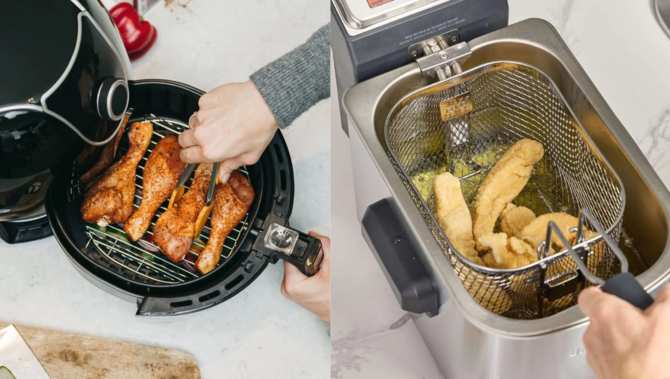
For years, deep frying has been almost inseparable from Indian cooking. Samosas, pakoras, puris, fries, chicken wings and even some everyday snacks are traditionally dropped into hot oil because it delivers something difficult to replicate: a crisp exterior, fast cooking and that familiar fried flavour. But the way people cook at home is changing. Air fryers have moved from being a niche kitchen appliance to a regular countertop companion, largely because they can produce browned and crisp food while using little or no added oil.That does not make deep frying obsolete. Oil still has advantages when it comes to texture, speed and certain recipes. The difference is that air frying gives households another way to prepare the foods they already enjoy, particularly when reducing the amount of added oil is a priority.In 2026, the choice is less about declaring one method universally better and more about understanding where each method works best. From oil consumption and texture to cleaning and convenience, the two methods have some meaningful differences.Deep frying is the most common cooking method in Indian cooking without a doubt. This method is actually simple, and unfortunately, the food cooked in this method is very delicious. But mindsets have changed now. People are slowly moving towards healthier ways of cooking as they are more aware of the harm and consequences. Especially the younger generations have solemnly pledged towards fitness and proper nutrition, but with that scrumptious taste. And their best friend in this journey is the air fryer. An air fryer approaches the same basic goal from an alternative perspective. Instead of surrounding the food with hot oil, it circulates heated air around the food. Only a small amount of oil can still be used when desired, but the food does not need to be submerged. This makes a significant difference in more than one way. It changes the texture, the cooking process, the cleanup and, not least, its practical feel in everyday meals.For Indian kitchens, this is interesting because an air fryer can handle everything from frozen snacks and fries to vegetables, chicken and reheated foods without requiring a pan of hot oil.Deep frying requires a considerable quantity of oil because the food needs to be surrounded by it during cooking. Part of this oil becomes part of the finished food through absorption. Whereas air frying works with hot circulating air, food can be cooked with very little to no oil in some cases. This doesn’t mean every air-fried food is healthy. Packaged frozen snacks are processed, no matter how you cook them. However, replacing deep frying with air frying can reduce the amount of additional cooking oil used.A 2026 study on an air-jet-assisted air-frying system also found significantly lower oil content and oil absorption compared with conventional deep frying while maintaining acceptable texture and sensory characteristics. This is why air frying makes practical sense rather than being another kitchen trend.Not exactly, and that is worth acknowledging. Deep frying has an advantage when it comes to the classic combination of crispness, moisture and the rich flavour associated with hot oil. Because food is directly surrounded by oil, browning happens quickly and evenly. Air frying can produce a very satisfying crisp exterior, but the result is generally lighter. Foods can have a dry, crisp surface lacking the same oily richness of deep-fried food. For certain dishes, that is hardly a problem. French fries, chicken wings, nuggets, kebabs and frozen snacks can perform particularly well in an air fryer. For foods where the oil itself contributes significantly to the flavour and texture, traditional deep frying can still have the edge.So, the better question is not whether an air fryer can perfectly replace a deep fryer, but if it can deliver a good enough result for everyday cooking and make the process easier and less oil-heavy. Then, the answer is yes. Foods that work well in an air fryer:An air fryer can also be particularly useful for reheating fried food. Instead of putting yesterday's samosa into a microwave and ending up with a soft exterior, circulating hot air can help restore some of its crispness.Foods better suited to deep fryingDeep frying is usually faster. Oil transfers heat efficiently, which is why a batch of fries or pakoras can cook within minutes. Air frying relies on circulating hot air, which can lead to longer cooking. However, cooking time is not the only measure of convenience.An air fryer can require less preparation. Once the food is placed inside and the temperature and time are selected, there is generally less hands-on work. For someone cooking a quick snack after work, this can matter more than reducing a few minutes off the cooking process.Anyone who has deep-fried food at home knows that the cooking does not end when the food comes out of the oil. There is the used oil, the frying pan, splattered surfaces and utensils that need to be cleaned. Depending on the quantity of food, the process can also become rather messy. Air frying is much cleaner by comparison. There is no large quantity of oil to get rid of, and most of the mess is confined to the cooking basket or tray. A dishwasher-safe removable tray can make the process even simpler.An Air Fryer’s clearest advantage is the ability to cook with significantly less added oil. Air-fried foods have shown lower levels of acrylamide and other potentially undesirable compounds, though the results vary depending on the food and cooking conditions. Importantly, it does not guarantee lower acrylamide in every situation. One 2024 study comparing air-fried, deep-fried and oven-fried potatoes found the differences in acrylamide levels were not statistically significant under their tested conditions.So, air frying can reduce added oil, but the overall nutritional value of a meal still depends on what is being cooked, ingredients used, portion size, temperature and cooking time. That makes air frying a useful cooking method but not a magic health shortcut.Capacity should be one of the first considerations. A compact air fryer may work perfectly with one or two people, whereas a larger (above 5L) model offers more flexibility for families or larger batches. Temperature control is equally important. Different foods require different cooking temperatures, so an appliance with a useful temperature range is more versatile than one based on a handful of fixed settings. Preset menus can also make things more approachable for those who do not want to manually calculate cooking temperatures and times themselves. Other features worth checking include:Choose deep frying if:You want the traditional flavour and texture of fried food, need very fast frying or regularly prepare foods where oil is central to the recipe.Choose air frying if:You want to reduce added oil, prefer easier cleanup and want a more convenient everyday cooking method while being comfortable with a slightly different texture.For most modern kitchens, there is no need to treat the two methods as mutually exclusive. Deep frying can remain an occasional cooking method for dishes where it genuinely makes a difference, while an air fryer can handle the everyday workload.Air frying can be a better option when the goal is to reduce added cooking oil. However, it does not automatically make every food healthy. The nutritional value still depends on the ingredients, preparation method, cooking temperature and portion size.Not always. Air fryers can handle many popular fried foods, but deep frying can still produce a different level of crispness, texture and flavour. Some traditional recipes may work better with conventional frying.Yes. Many Indian snacks, including samosas, cutlets, paneer preparations, kebabs and pakoras, can be adapted for air frying. The texture may differ from deep-fried versions, particularly for recipes where batter needs to be completely immersed in oil.Its 5L capacity makes it suitable for everyday family cooking and larger batches than many compact air fryers. The actual quantity that can be cooked at once will depend on the food and how much space it needs for proper air circulation.The removable tray is dishwasher-safe, which can make cleaning easier after cooking. This is one of the practical advantages of air frying over traditional deep frying, where leftover oil and greasy utensils can create significantly more cleanup.Air frying can be done with little or no added oil, depending on the recipe. That is one of its biggest differences from deep frying, where food is cooked while immersed in oil.
Air Fryer vs Deep Frying: What Is Actually Different?
Air Frying Uses Far Less Added Oil
But Does Air-Fried Food Taste Like Deep-Fried Food?
Which Is Better for Everyday Indian Cooking?
- French fries and potato wedges
- Samosas
- Tikkis and kebabs
- Chicken wings and pieces
- Paneer
- Roasted vegetables
- Frozen snacks
- Garlic bread and toast
- Reheating pizza and snacks
- Puris
- Bhaturas
- Some varieties of pakoras
- Jalebi
- Poori-style breads
- Foods requiring complete oil immersion
Air Fryer vs Deep Frying: Cooking Time
Cleanup Is Where Air Fryers Gain a Point
What About Health? Air Frying Has an Advantage Here But with Limited Use
What to Look For When Buying an Air Fryer
- Capacity and basket size
- Temperature range
- Preset cooking programmes
- Digital controls
- Ease of cleaning
- Noise levels
- Basket and tray construction
- Safety features
- Warranty and after-sales support
Best-Selling Air Fryer in India!
The Crompton Ameo Edge 5L takes the basic air-fryer concept and focuses on making it easier to use regularly. It comes with a 5L capacity, which gives it enough room for everyday family cooking without moving into the much larger model. Its design is also intended to make better use of kitchen counter space. Crompton uses an edge-to-edge design that provides more cooking space while helping retain heat for more even browning. Ameo Edge comes with 10 preset cooking options. Instead of manually deciding the temperature and cooking duration every time, users can start with a preset and adjust it when necessary. For experienced cooks, manual controls will probably remain more useful. For someone using an air fryer for the first time, however, presets reduce the learning curve.The appliance also offers a temperature range of 80°C to 200°C, giving users control over different types of preparations rather than restricting the appliance to preset cooking alone. Crompton's SilentPro technology is designed to keep the Ameo Edge's operation below 52dB.The removable dishwasher-safe tray is another practical touch. Features like these may not make a product look dramatically different on a specification sheet, but they can determine whether an appliance becomes a daily-use device or something that gradually gets pushed to the back of a cupboard.Key Features
- 5L capacity: Designed for family-sized everyday cooking
- NutriGuard Technology supports oil-free cooking while helping retain the natural aroma and texture of food
- 10 preset menus: One-touch programmes simplify common cooking tasks
- Interactive digital display: Makes temperature and cooking controls easier to access
- SilentPro Technology is designed for quieter operation, with operation rated below 52 dB
- Edge-to-Edge design: Aims to provide more usable cooking space while supporting heat retention and even browning
- 80°C–200°C temperature range offers flexibility across different recipes
- Dishwasher-safe removable tray makes post-cooking cleanup easier
- 1-year manufacturer warranty
Air Fryer vs Deep Frying: Which One Should You Choose?
FAQs
- Is air frying healthier than deep frying?
- Does an air fryer completely replace deep frying?
- Can I cook Indian snacks in an air fryer?
- Is the Crompton Ameo Edge 5L suitable for family cooking?
- Is the Crompton Ameo Edge 5L easy to clean?
- Does air frying use oil?

About the AuthorAshna Ali
End of Article

quick links
Best Split ACBest i5 LaptopsSide By Side Door RefrigeratorsTouch Screen Laptops750 Watt Mixer Grinder32 Inch Smart TV500GB hard diskTablets under 12000Hydraulic Storage BedsRunning machinesBeard Trimmer for MenJeggings for womenCo-ord sets for womenHybrid Smartwatches for menBest Smartwatch Under 1500Over-ear headphones13 inch laptopsPortable hotspot devicesHarmonium for beginnersBass guitarsBest Gaming HeadphonesBest VR HeadsetsCar UmbrellasBest Stretch Mark Creams and OilsGirls’ bicyclesWicket keeper glovesHardsided trolley bagsBackpack for womenBackpack for menWeight loss teaOrganic turmeric powderBest Kitchen chimney in IndiaLCD writing tablet2TB Hard DiskWireless earphones under 1000Bluetooth earbudsAir Conditioner9kg Washing Machines65 Inch TVVacuum CleanersBest Water PurifiersBest AC In IndiaAutomatic Washing MachineBest AC Under 20000
Copyright © 2026 Bennett, Coleman & Co. Ltd. All rights reserved. For reprint rights: Times Syndication Service